

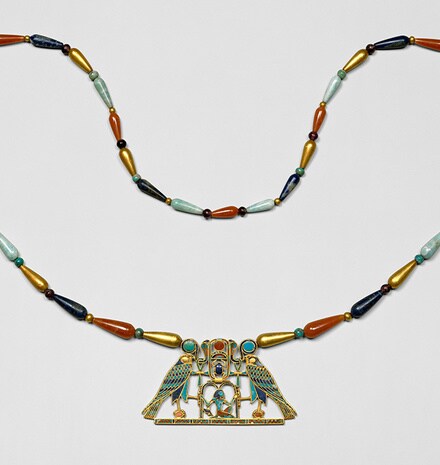
Long before Pliny the Elder (1st century C.E.) listed fine and precious stones in Natural History, Mesopotamian and Egyptian civilizations used lapis lazuli in ornaments and amulets, alongside ribbon agate, rock crystal, carnelian, and turquoise.
The Middle Ages revived glyptic art, with ornamental stones adding color to cameos, intaglios, and religious talismans. By the 17th century, Italian refinement influenced French craftsmen, leading to the 19th-century European trend of decorating furniture with elaborate hardstone marquetry.
Join our speakers as they explore the revival of ornamental stones, from their historical significance to their resurgence in the 1970s, when societal and spatial conquests reignited interest in long-neglected materials like malachite.
Online Talk:
Tuesday, July 21st, 12 p.m. - 1 p.m. (U.A.E time)
In English
Speakers:
With Chandra Horn, gemologist and lecturer at L’ÉCOLE, School of Jewelry Arts
Dr. David Usieto Cabrera, lecturer at L’ÉCOLE, School of Jewelry Arts
Photo credit: Necklace of Sithathoryunet
Amethyst, carnelian, lapis lazuli, green feldspar, yellow gold
Middle Empire, circa 1887 – 1878 B.C.
Metropolitan Museum of Art, New York