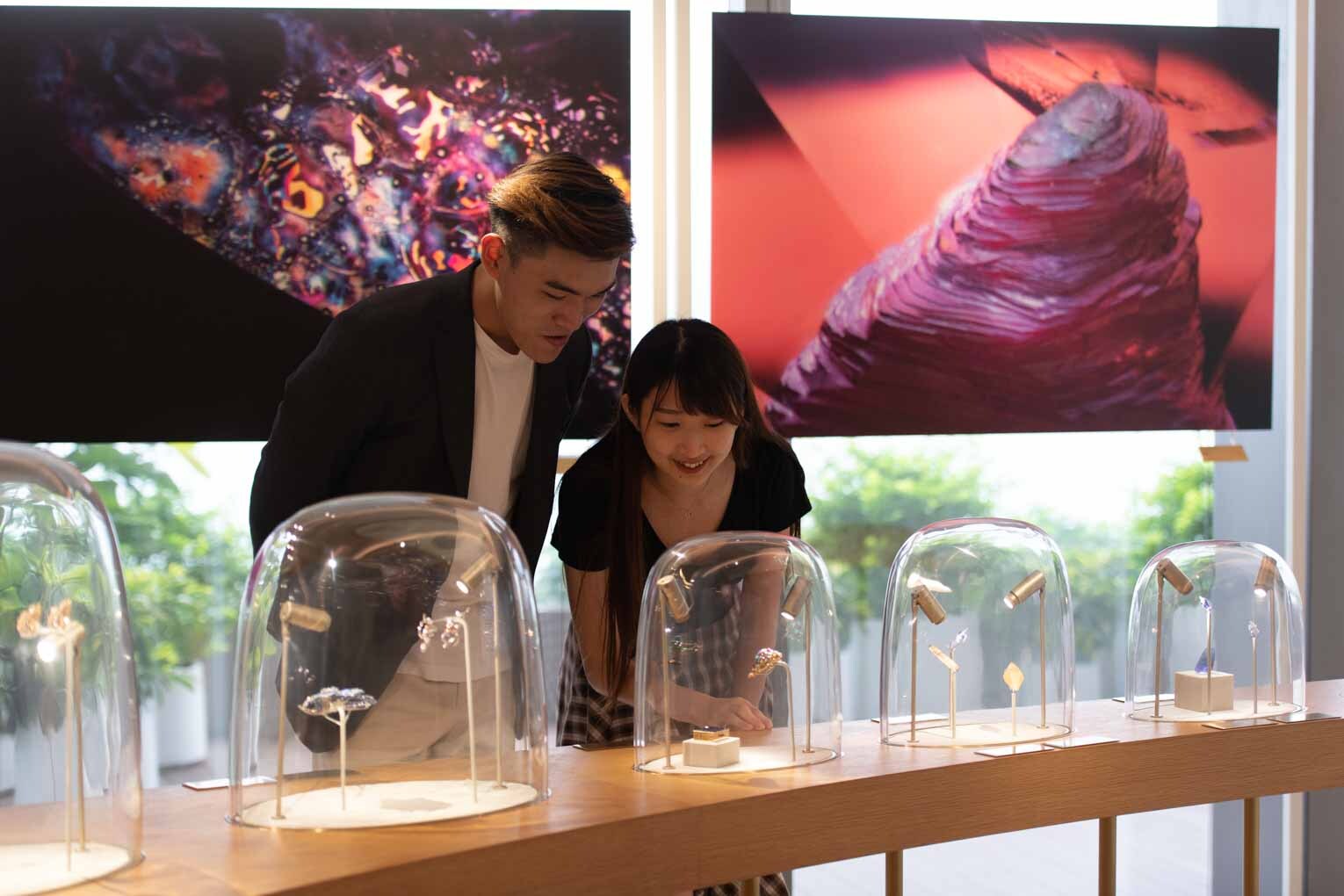
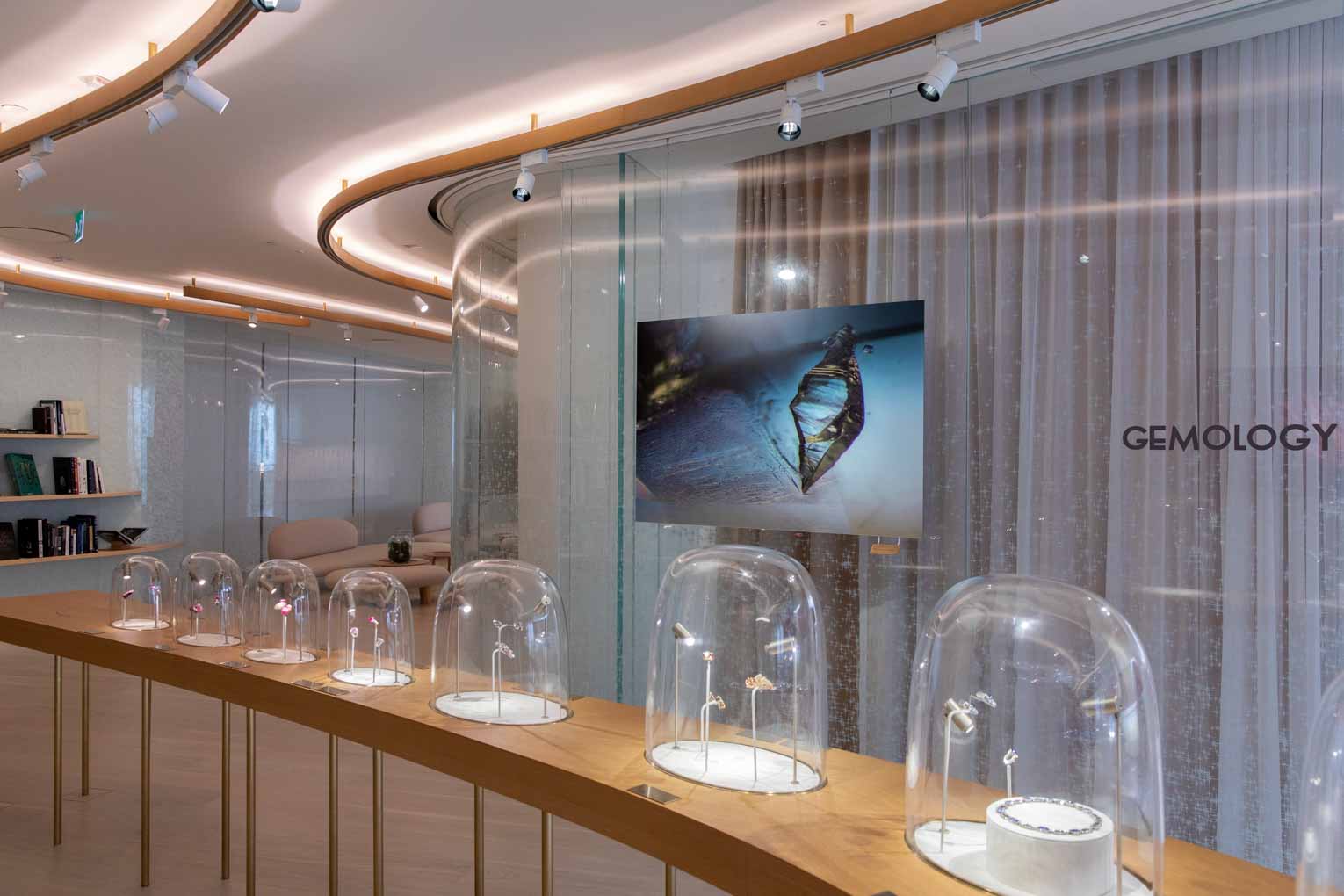
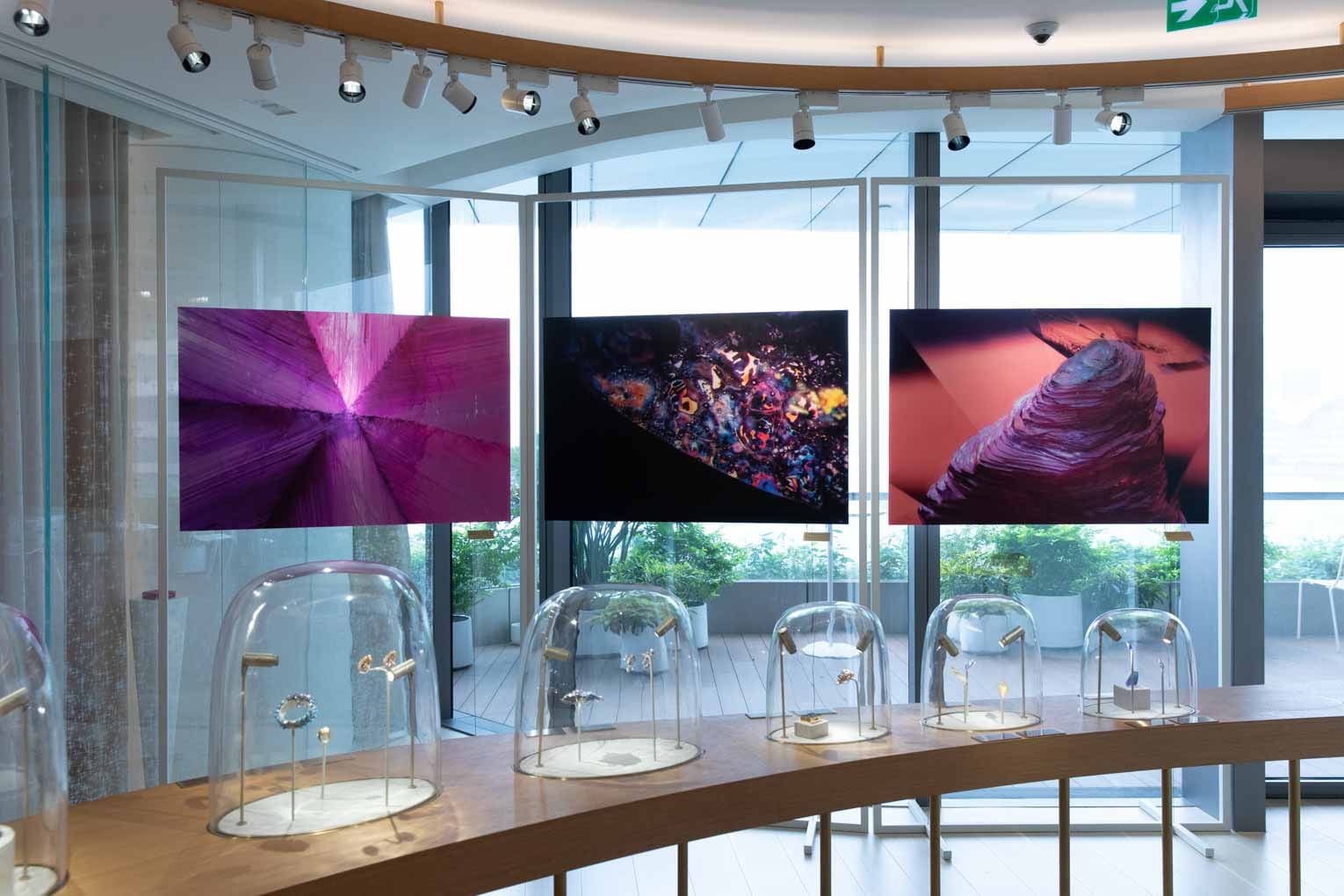
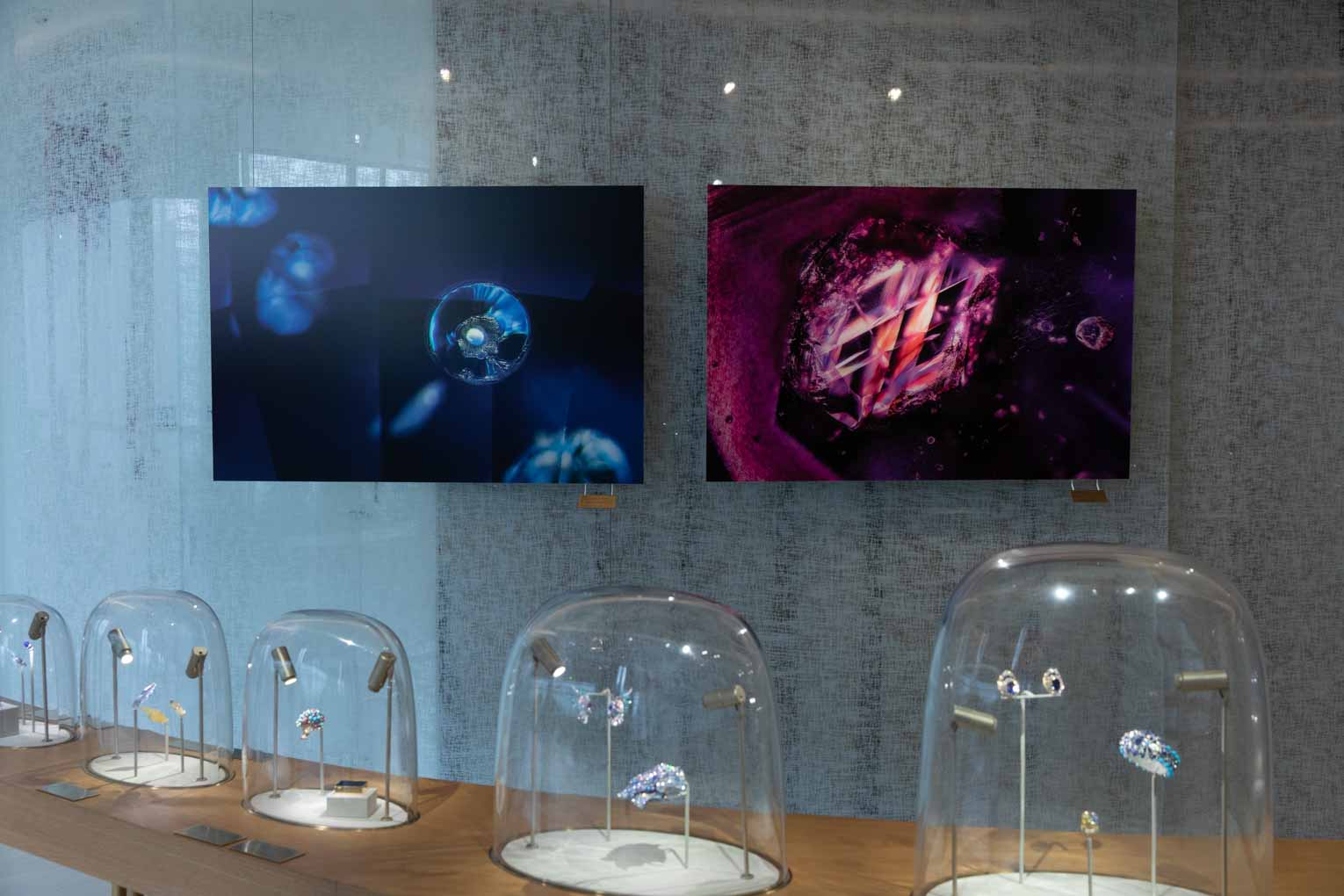
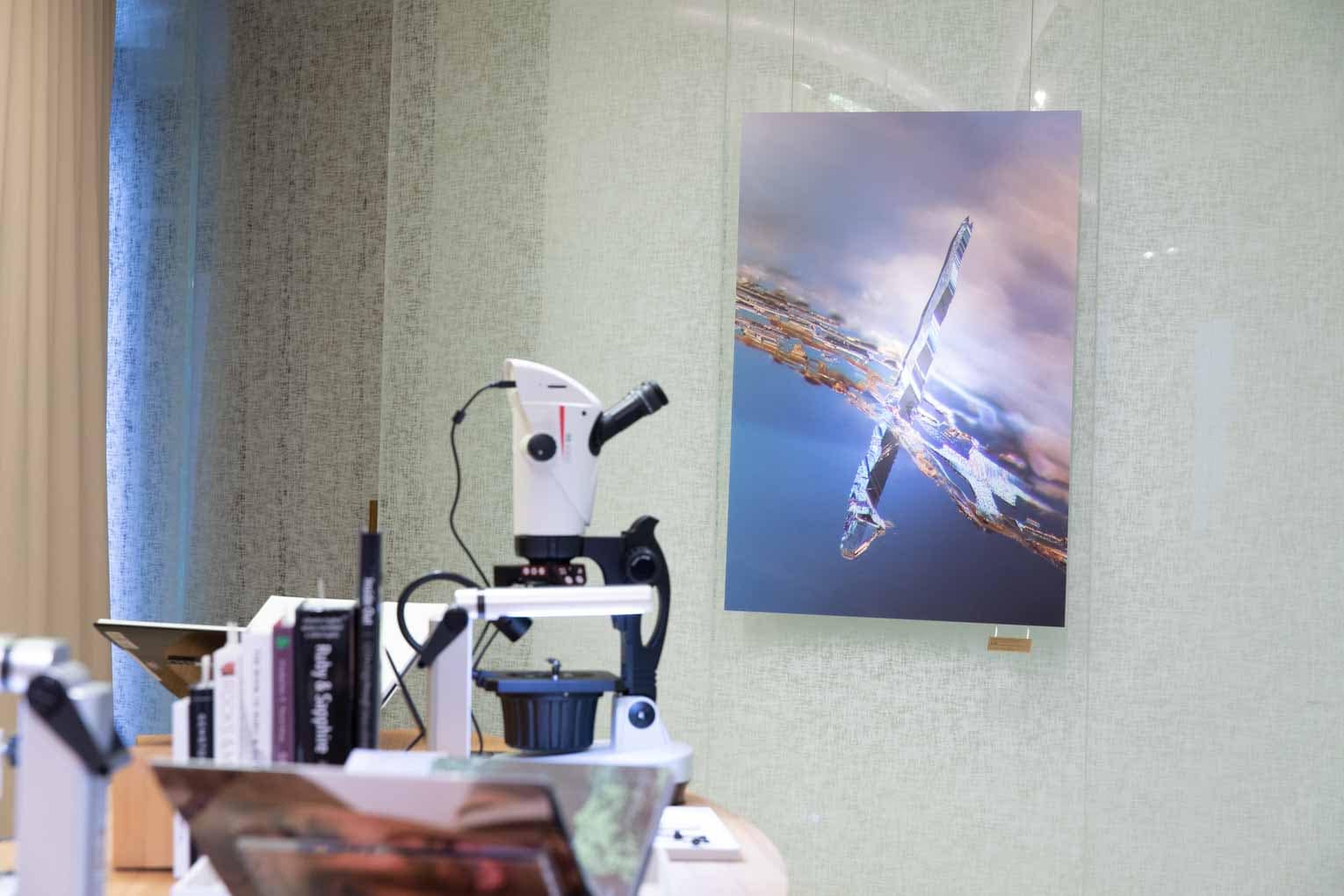
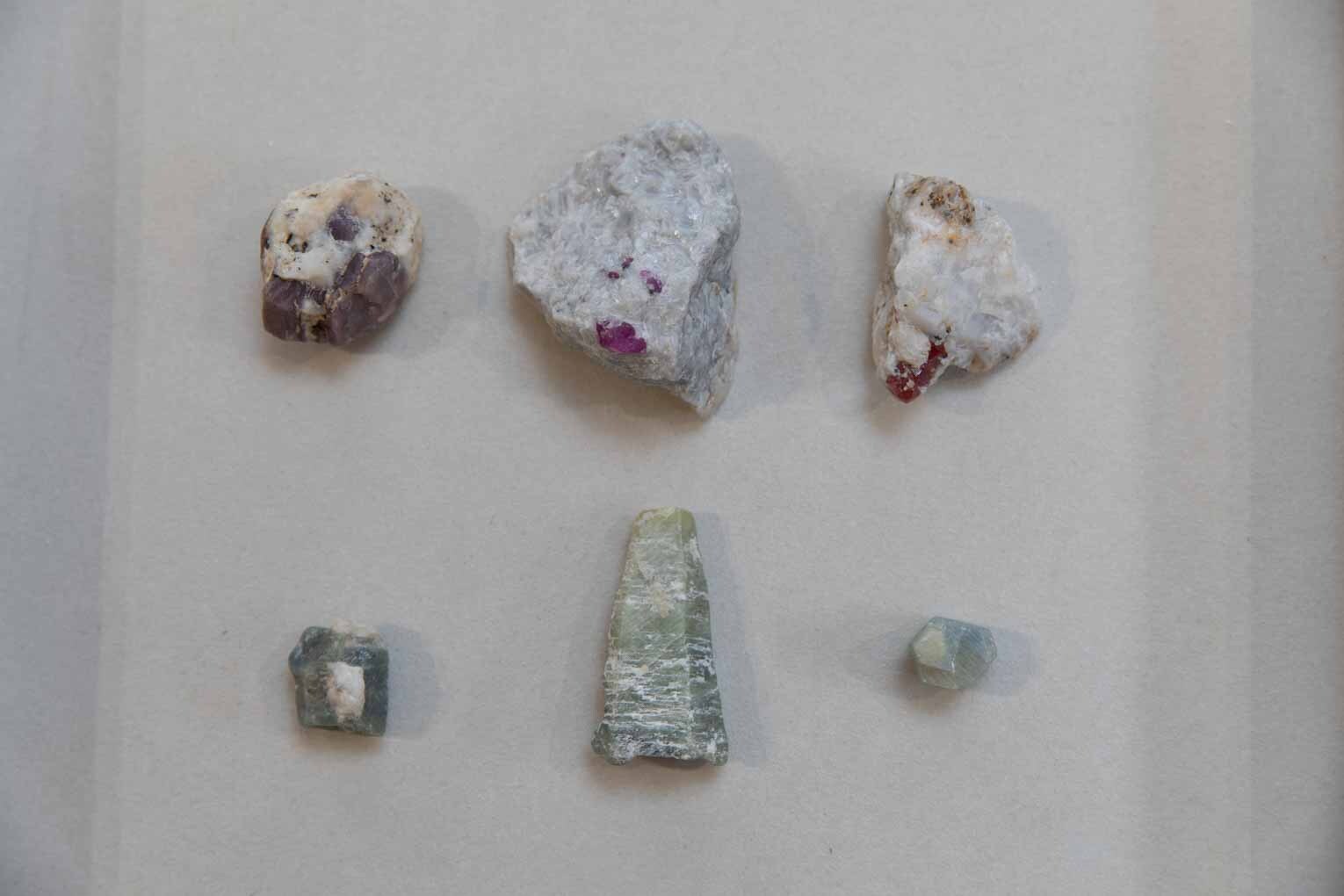
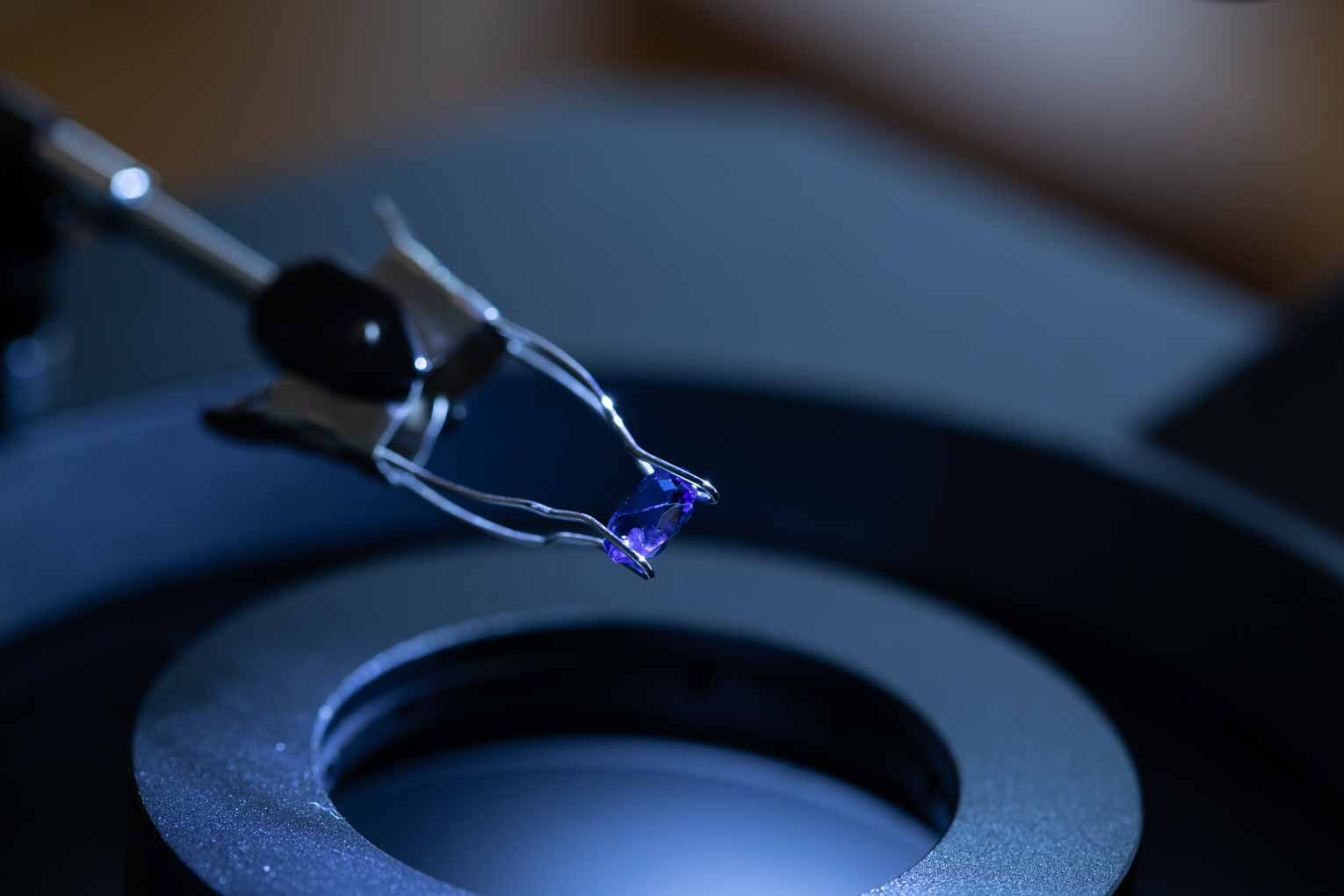
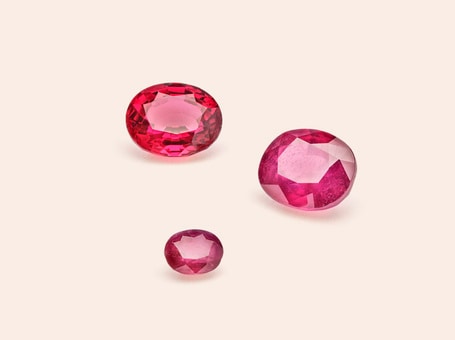
The most obvious aspect of a gemstone is its external beauty. Thus, appreciation of gemstones is, at its heart, an exercise in aesthetic “subjective” judgment. Yet, both jewelers and gemologists tend to reach for “objective tools” (instruments) to describe these inherently subjective phenomena. The one instrument that does not neuter the senses is the microscope. When one views a gemstone’s magnified interior, the “read out” is replaced by a sense of awe and wonder. In a lifetime of assault by time control, where each day is broken into ever smaller digital time bits, suddenly you plunge into a world of frozen time, one that affords vistas of millions or even billions of years. You witness the primordial forces that gave birth to our planet and the entire cosmos. Photomicrography is not just about gemology, but also about painting - painting with light - the heart of the photographic art. A master photomicrographer utilizes light like an orchestra conductor, with movement and cross direction, hiding, shaping and illuminating as needed. Like Scott Kelby’s flower, the photomicrographer has a chance to present you with a new perspective, to allow you to view the world in a way you’ve never seen it before. And that is the very essence of art. When you hold a ruby in your hand, you clasp something unique. Every gem contains a story. The place from where it was found, the excitement of the miner who discovered it and their hope for a better future, the painstaking care and risk a lapidary took to shape and polish it. And this narrative is wrapped around a bundle of light that will never dim with time. The photomicrographic art provides you with a picture window into the creation process of earth itself. It helps you understand that, when you hold a ruby, you hold not just a pretty pebble, but literally William Blake’s “infinity in the palm of your hand.”